
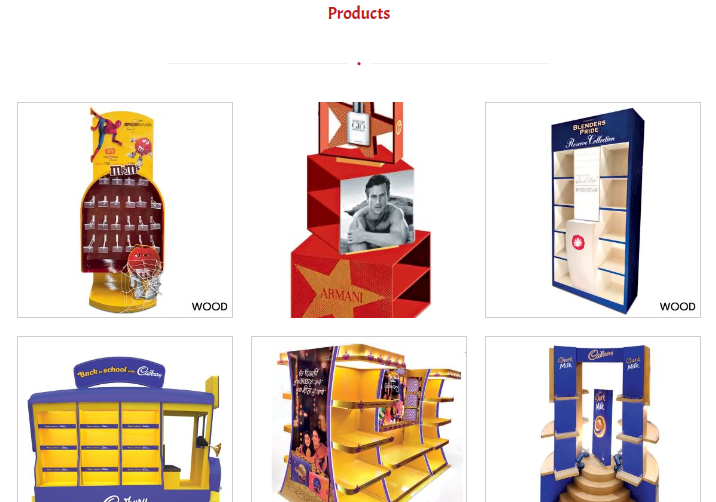
Spectrum designs and manufactures custom wooden display stands, racks and retail display shelves for brands that want their products to look premium at the point of sale. We work in solid pine and rubber wood as well as MDF and plywood, cut on CNC routers and finished in our own paint booths. That means the counter unit built for your fiftieth store matches the one in your flagship.
Every project is made to order for brand and retail use: counters, floor units, wall shelving and shop-in-shop fixtures, not ready-made stands.
Wooden Display Stands and Fixtures We Make
Floor-Standing Wooden Display Units
Freestanding units with shelves, hooks or product niches, built for long-term placement in brand stores, malls and large-format retail. Wood suits floor units that need to stay presentable for a year or more. For short campaigns, a floor-standing display unit (FSDU) in corrugated board is usually the better fit.
Wooden Counter Displays
Compact units that sit on a billing counter, service desk or glass counter top. Common for watches, fragrance, premium confectionery and accessories, where the display needs to look as considered as the product.
Wooden Retail Display Shelves and Wall Units
Branded wall shelving, gondola inserts and back-wall fixtures that give a brand a defined block of space inside a multi-brand store. Shelf spans and thicknesses are engineered to the real product weight so shelves stay level under full stock.
Wooden Display Racks
Open racks for footwear, apparel, books, bottles and packaged goods, in solid wood or ply construction with painted, stained or laminated finishes.
Shop-in-Shop Counters and Brand Zones
Complete branded counters combining wooden structure with acrylic, metal and printed graphics, for brands taking a dedicated zone inside a department store or mall.
Plinths, Risers and Display Trays
Smaller wooden elements that lift hero products, organise SKUs on a counter or create levels inside a window display.
Choosing the Right Wood for a Retail Display
The material decides how the display looks, how much weight it carries and how it holds up over time. Most retail fixtures use more than one.
| Material | Look and finish | Strength | Best used for |
|---|---|---|---|
| Pine | Light colour, visible grain; takes stain and varnish well | Softer; dents more easily | Natural-look displays, trays, crates, lighter-duty units |
| Rubber wood | Even, pale grain; polishes to a smooth finish | Dense and stable | Solid wood counters, racks, premium natural finishes |
| MDF | Very smooth surface; ideal base for paint, PU and Duco | Heavy; swells if moisture gets into unsealed edges | Painted fixtures, curved or routed shapes, brand-colour units |
| Plywood | Layered edge; usually laminated, veneered or painted | Strong; holds screws well | Shelves carrying heavy products, structural carcasses |
How We Build and Finish Wooden Displays
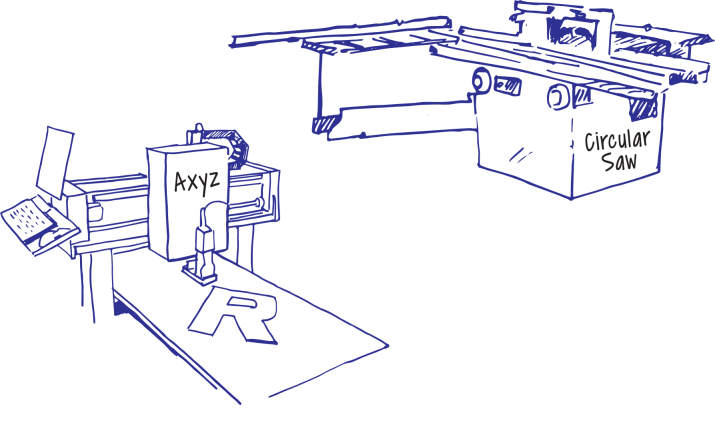
Engineered boards are cut on CNC routers and cutting machines, which keeps parts identical across a multi-store order and makes complex shapes, joints and routed logos repeatable.
Finishing happens in-house. Solid wood is polished, varnished and coated to the brand's specification. Painted units go through dust-proof paint booths with water curtains for PU or Duco coatings, plus special-effect overcoats and varnishes where the design calls for them. A dedicated baking oven cures the finish for a harder, longer-lasting surface.
Because Spectrum also runs acrylic fabrication, metal fabrication and large-format printing, mixed-material fixtures are made and test-fitted in one place instead of being assembled from three suppliers' parts.
Where Wooden Displays Work Best
Wood earns its cost in permanent or long-running placements where the display carries the brand's positioning: watch and jewellery counters, fragrance and cosmetics zones, spirits and wine, premium apparel and footwear, home and kitchen brands, and brand stores for electronics accessories.
The trade-offs are worth planning for. Wooden units are heavier to ship than corrugated or acrylic displays, take longer to produce, and need proper sealing for humid regions and wet-mopped floors. For a four-week promotion, a lighter material is usually the smarter spend.
Why Brands Work with Spectrum
Spectrum is an ISO 9001:2015 certified manufacturer with more than 25 years in point-of-sale displays and four production facilities covering over 120,000 sq ft. Wood, acrylic, metal, thermoforming, corrugation and printing all run in-house, so one team owns your fixture from drawing to dispatch.
Frequently Asked Questions
Which wood is best for retail display stands?
It depends on the finish and the load. Solid rubber wood or pine suits displays where the natural grain should show. MDF gives the smoothest base for painted PU or Duco finishes. Plywood is the stronger choice for shelves that carry heavy products. Many retail displays combine them, for example a plywood carcass with an MDF painted face.
Are wooden display stands suitable for humid Indian conditions?
Yes, if the wood is sealed properly. Untreated MDF and plywood absorb moisture and can swell, so every surface, including edges and the underside, should be sealed with a PU coat, lacquer or laminate. A raised base or protective foot keeps the unit off wet-mopped floors.
Can a wooden display be combined with acrylic, metal or printed graphics?
Yes. Most premium retail displays mix materials: a wooden structure with acrylic shelves or product holders, metal frames or hooks, and printed graphic panels. Spectrum makes wood, acrylic, metal and printed components under one roof, so the parts are designed to fit together.
Do you make wooden display stands for multiple stores?
Yes. Spectrum builds wooden displays for brand rollouts across multiple outlets as well as single flagship fixtures, and finishes every unit in the same paint booths so the colour and finish match across locations.
How long does it take to make a custom wooden display stand?
Timelines depend on the design, the finish and the number of units. A new design usually goes through drawings, a prototype and approval before production starts. Share your quantity and in-store date and the team will confirm a schedule.
